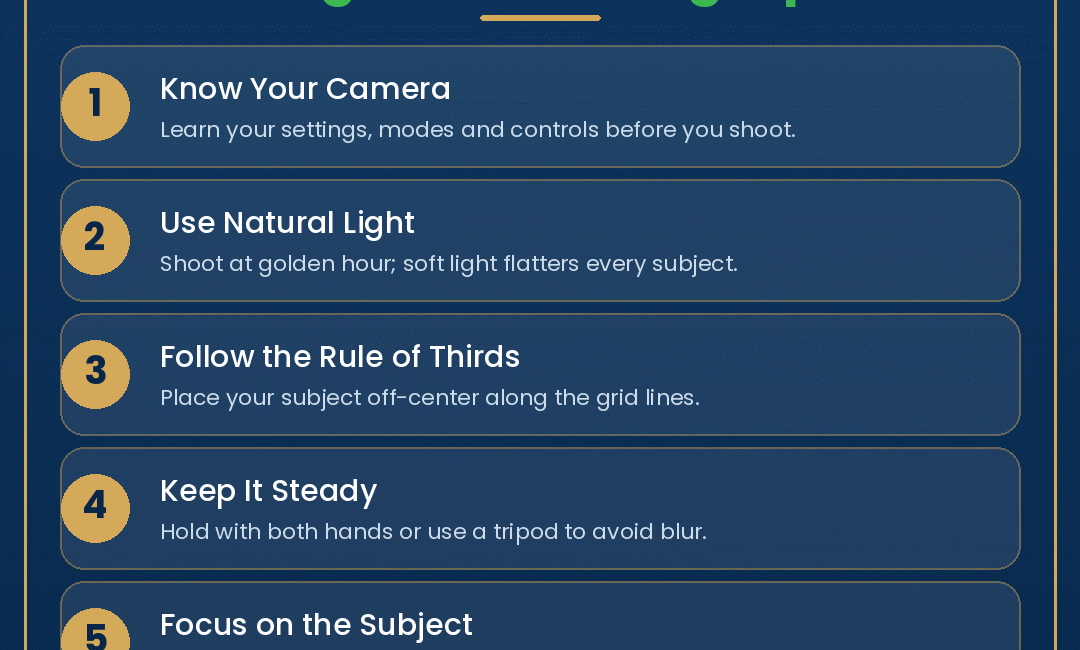
Taking good photographs is a skill that improves with practice, creativity, and an understanding of basic photography techniques. Whether you are capturing beautiful landscapes, memorable family moments, products, or delicious meals, the right approach can make your pictures more attractive and professional. You do not always need an expensive camera to take great photographs. A smartphone, good lighting, and a few simple techniques can help you achieve excellent results.
Photography is also important for businesses, especially restaurants, food brands, and hospitality companies. High-quality food photography can make dishes look more appealing, attract customers, and create a strong impression on social media, websites, and online menus.
Here are seven useful tips to help you take better photographs.
1. Use Natural Lighting
Lighting is one of the most important elements of photography. Good lighting highlights details, improves colors, and makes your subject look more attractive. Whenever possible, use natural light from a window or photograph outdoors during the early morning or late afternoon.
Avoid harsh sunlight directly hitting your subject because it can create strong shadows and overexposed areas. If you are taking pictures indoors, position your subject near a window to create a soft, natural appearance.
For food photography, natural lighting can highlight the texture, color, and freshness of dishes. For example, soft light falling across a plate of pasta or a freshly prepared dessert can make the food look more appetizing. If the light is too strong, use a thin curtain to soften it.
2. Pay Attention to Composition
Composition refers to how different elements are arranged within a photograph. A well-composed image guides the viewer’s attention toward the main subject and creates a balanced appearance.
One simple technique is the rule of thirds. Imagine dividing your image into nine equal sections using two horizontal and two vertical lines. Place your main subject near one of the lines or their intersections instead of always positioning it in the center.
You can also use leading lines, natural frames, and balanced spacing to make your photographs more interesting. Before taking a picture, check the background and remove anything that distracts from the subject.
In food photography, composition helps present dishes beautifully. Arrange plates, cutlery, napkins, and other props carefully to create an attractive scene without making it look overcrowded. Keep the main dish as the focus of the image.
3. Choose the Right Background
A background can improve a photograph or distract viewers from its main subject. Choosing the right background helps your subject stand out and gives the image a clean, professional appearance.
Simple backgrounds are often the best choice, particularly when photographing products, portraits, or food. Neutral colors such as white, beige, gray, and natural wood can complement many subjects. However, colorful backgrounds can also work well when they match the overall style of the photograph.
Before taking a picture, look around the edges of the frame. Remove unnecessary objects, avoid clutter, and make sure nothing appears to be coming out of the subject’s head or body.
For restaurant menus and food photography, a clean tabletop or subtle background can help highlight the meal. You can introduce a few relevant props, such as fresh ingredients or serving utensils, to add context without taking attention away from the dish.
4. Experiment With Different Angles
Taking every photograph from the same angle can make your images look repetitive. Experimenting with different viewpoints allows you to discover the most attractive way to present your subject.
Try photographing from above, at eye level, from the side, or from a lower angle. Each viewpoint creates a different impression. For example, a low angle can make a building appear impressive, while an eye-level portrait can feel more natural and personal.
The best angle depends on what you are photographing and the story you want to tell.
For food photography, an overhead angle works particularly well for flat dishes such as pizza, salads, and platters. A 45-degree angle is useful for showing the top and sides of a dish, while a lower angle can highlight the layers of burgers, cakes, and sandwiches.
Take several shots from different positions and compare the results before deciding which image works best.
5. Keep Your Camera Steady
Camera movement can cause blurry photographs, especially when you are taking pictures indoors or in low light. Holding your camera or smartphone correctly can help you capture sharper images.
Use both hands to support your device and keep your elbows close to your body. If possible, lean against a stable surface or use a tripod. You can also use your phone’s timer to reduce movement when taking pictures.
Make sure your subject is in focus before capturing the image. On most smartphones, you can tap the screen to select the area you want to focus on. Some devices also allow you to adjust exposure by sliding a control on the screen.
Sharp images are particularly important for food photography because customers want to see the details of a dish, including its ingredients, texture, and presentation. Keeping your camera steady helps preserve those details and produces clearer images for websites, menus, and promotional materials.
6. Adjust Camera Settings and Exposure
Understanding a few basic camera settings can help you take better photographs in different environments. Exposure determines how bright or dark an image appears. An image that is too bright may lose important details, while an image that is too dark can hide the subject.
If you are using a smartphone, start by tapping your subject to focus and adjusting the exposure when necessary. Avoid using digital zoom too much because it can reduce image quality. Instead, move closer to your subject when it is practical.
If you use a dedicated camera, learning about aperture, shutter speed, and ISO can give you greater control over your photographs. These settings affect brightness, motion, and background blur.
For food photography, the goal is to preserve natural-looking colors and details. Avoid excessive exposure adjustments that make food appear washed out or unnatural. Check the final image on your screen to ensure that the dish looks realistic and appealing.
7. Edit Your Photos Carefully
Editing can improve a photograph by correcting brightness, adjusting contrast, enhancing colors, and removing minor distractions. You do not need advanced software to make useful adjustments. Many smartphones offer built-in editing tools, while applications such as Lightroom and Snapseed provide additional options.
Start with small changes to exposure, highlights, shadows, sharpness, and white balance. Crop the image if necessary to improve composition, but avoid removing important details from the frame.
One common mistake is applying too many filters or increasing saturation excessively. Overedited images may look artificial and fail to represent the subject accurately.
For food photography, careful editing can make ingredients look fresh and colors appear balanced. However, the finished photograph should still represent the actual dish customers will receive. This is particularly important for restaurants using images on online menus, websites, and delivery platforms.
Why Is Good Photography Important for Businesses?
Good photography does more than make images look attractive. It helps businesses communicate their quality, build trust, and present their products effectively. Restaurants can use professional-looking photographs on websites, social media accounts, digital menus, and advertising campaigns.
For hospitality businesses, high-quality food photography can encourage potential customers to explore a menu and learn more about the dining experience. Clear, appealing photographs also help establish a consistent visual identity across different marketing channels.
Even small businesses can improve their photography by using natural lighting, choosing suitable backgrounds, and practicing different composition techniques. Consistency is more important than having expensive equipment.
Conclusion
Taking good photographs becomes easier when you understand the basics of lighting, composition, backgrounds, angles, camera stability, exposure, and editing. These seven tips provide a practical starting point for beginners and anyone looking to improve their photography skills.
Whether you are photographing people, products, landscapes, or meals, practice will help you understand which techniques work best. In particular, food photography can make dishes look more appealing when you combine natural lighting, thoughtful styling, suitable angles, and careful editing.
Start experimenting with these techniques using the camera you already have. With patience and regular practice, you can create clearer, more attractive, and more professional-looking photographs.