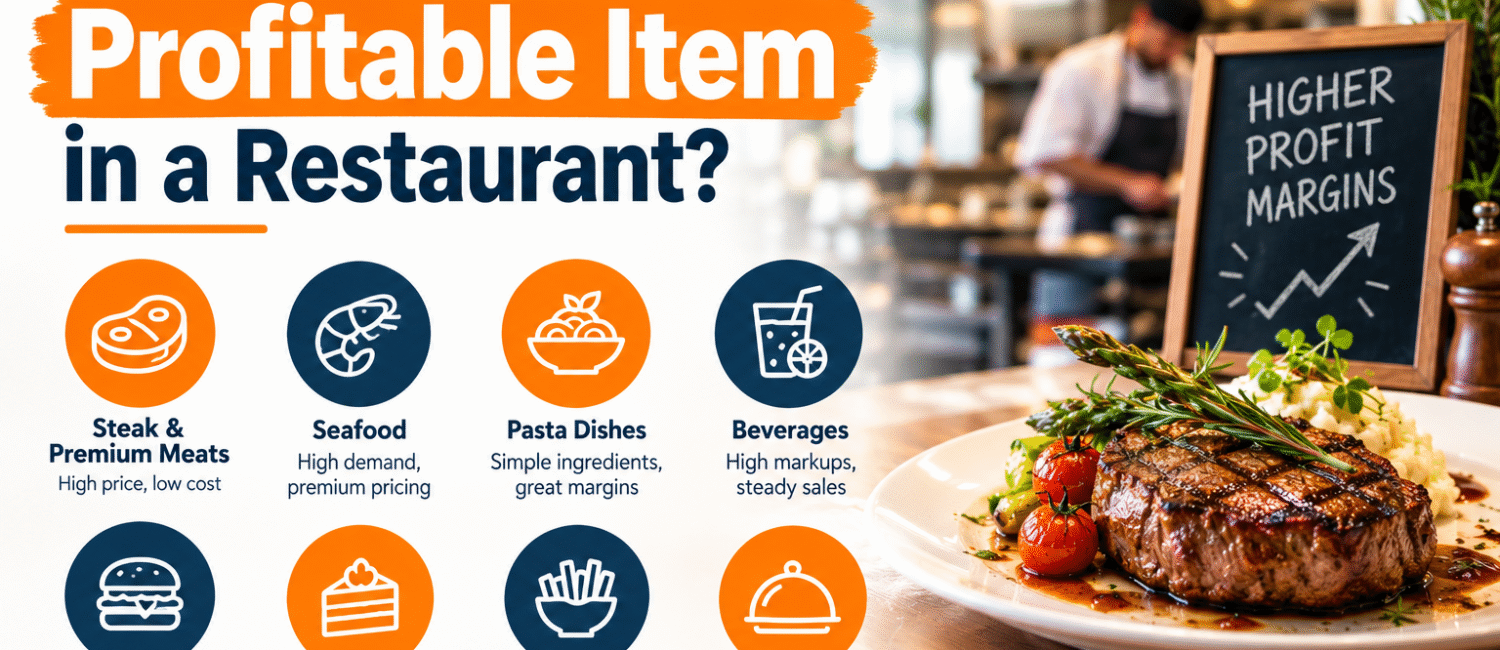
Running a successful restaurant requires more than serving delicious food. Restaurant owners must also understand food costs, customer preferences, pricing strategies, and profit margins to build a sustainable business. One of the most common questions restaurant owners ask is: what’s the most profitable item in a restaurant?
Generally, beverages, coffee, tea, desserts, pasta, pizza, and certain appetisers can deliver excellent profit margins. However, the most profitable item depends on the restaurant’s concept, location, target audience, ingredient costs, and pricing strategy. Understanding which menu items generate the highest returns can help restaurant owners increase revenue while keeping customers satisfied.
What Makes a Restaurant Item Profitable?
A profitable restaurant item generates more revenue than it costs to prepare and serve. However, its profitability involves more than the price customers pay.
Restaurants must consider ingredient expenses, preparation time, portion sizes, packaging, waste, and other operating costs. For example, a dessert might have inexpensive ingredients and require minimal preparation, allowing the restaurant to earn a strong gross profit on each serving.
Restaurant owners should also consider demand. An item with a high profit margin may not contribute much to overall earnings if customers rarely order it. The ideal menu item combines attractive profit margins with consistent sales.
1. Beverages: One of the Most Profitable Restaurant Categories
Beverages are often among the most profitable items on a restaurant menu because their ingredient costs can be relatively low compared with their selling prices.
Coffee, tea, soft drinks, lemonade, and house-made refreshments can generate attractive gross margins when portion sizes and ingredient costs are controlled.
For example, a restaurant might sell a cup of tea for significantly more than the cost of its tea leaves, milk, sugar, and water. The difference contributes toward labour, rent, utilities, and other business expenses.
Specialty coffees and signature drinks can also increase average order value. Restaurants can introduce seasonal beverages, premium coffee options, and house-made drinks to encourage customers to try something different.
2. Desserts: High Margins and Additional Sales
Desserts are another potentially profitable menu category. Cakes, brownies, ice cream, puddings, and other sweet treats can provide attractive gross margins, particularly when ingredients are purchased efficiently and waste is minimised.
Desserts also offer an opportunity to increase revenue without requiring customers to order another main course. A server recommending a dessert after dinner can encourage an additional purchase and improve the customer’s overall dining experience.
Restaurants can offer signature desserts that reflect their brand identity. For example, a fine-dining restaurant might serve a premium chocolate dessert, while a casual restaurant could offer brownies with ice cream.
The key is to maintain consistent quality, control portion sizes, and avoid preparing more desserts than the restaurant can reasonably sell.
3. Pizza: A Strong Combination of Demand and Profit Potential
Pizza can be a profitable choice for restaurants because many varieties use a manageable number of ingredients. Dough, tomato sauce, cheese, and selected toppings form the foundation of numerous menu options.
Restaurant owners can manage food costs by standardising recipes, measuring toppings, purchasing ingredients in bulk, and creating multiple pizzas from shared ingredients.
Premium options, such as speciality cheese pizzas or signature combinations, may support higher selling prices. Sides and beverages can also increase the value of each order.
However, cheese prices, delivery commissions, labour, and energy costs can affect profitability. Restaurants should calculate the complete cost of each pizza rather than relying only on ingredient prices.
4. Pasta: Affordable Ingredients with Flexible Pricing
Pasta dishes can offer strong profit potential because dry pasta is often relatively inexpensive, and a variety of sauces can be prepared using shared ingredients.
Tomato-based pasta, creamy sauces, and vegetable-based dishes allow restaurants to create diverse menu options without maintaining an excessively large inventory.
Restaurants can also offer premium pasta dishes featuring seafood, speciality cheeses, or high-quality proteins at higher prices.
To protect margins, portion sizes should be consistent, and expensive ingredients should be measured carefully. Menu pricing must reflect preparation time and the cost of additional ingredients.
5. Appetisers: Increasing the Value of Every Order
Appetisers can improve restaurant profitability by encouraging customers to spend more before their main course arrives.
Garlic bread, fries, spring rolls, dips, salads, and other starters may use relatively inexpensive ingredients while providing an appealing addition to the dining experience.
Restaurants can introduce sharing platters or appetiser combinations to encourage group orders. These options are particularly useful for family restaurants, casual dining establishments, and venues serving larger parties.
However, appetisers should complement the main menu rather than overwhelm customers or create unnecessary food waste.
6. Tea and Coffee in Fine-Dining Restaurants
For restaurants offering a premium dining experience, tea and coffee can be valuable additions to the menu. Customers may order these beverages after meals, during business meetings, or alongside desserts.
Specialty teas, espresso-based drinks, and premium coffee blends can support higher selling prices when quality and presentation meet customer expectations.
Fine-dining restaurants can also offer curated tea selections or signature coffee preparations that reinforce their brand identity.
The opportunity is not simply to sell a low-cost beverage. It is to deliver a consistent, enjoyable experience that customers consider worth paying for.
How to Calculate the Profitability of a Menu Item
Restaurant owners can estimate an item’s gross profit by subtracting its direct food and beverage costs from its selling price.
Formula:
Gross profit per item = Selling price − Direct ingredient cost
For example, suppose a restaurant sells a dessert for $8 and spends $2 on its ingredients.
- Selling price: $8
- Ingredient cost: $2
- Gross profit before other expenses: $6
- Gross profit margin: 75%
The calculation is:
Gross profit margin = ($6 ÷ $8) × 100 = 75%
This means the dessert has a 75% gross margin before accounting for labour, rent, utilities, equipment, payment processing, and other operating expenses. It does not mean the restaurant earns $6 in net profit.
For a more accurate analysis, restaurant owners should also calculate preparation costs, waste, packaging, and any delivery-platform fees that apply.
How to Identify Your Restaurant’s Most Profitable Item
Finding the most profitable menu item requires reviewing both financial performance and customer demand.
Start by calculating the ingredient cost and gross profit for every menu item. Next, examine sales reports to determine which items customers order most frequently. A popular dish with a moderate margin may generate more total gross profit than an expensive dish that sells only occasionally.
Restaurant owners can also use menu engineering to group items according to popularity and profitability. This approach helps identify dishes worth promoting, items that need recipe adjustments, and products that may need to be removed from the menu.
Regularly reviewing supplier prices, monitoring food waste, standardising portions, and training staff to recommend suitable add-ons can further improve results.
Tips for Increasing Restaurant Menu Profitability
Restaurant owners can improve profitability without compromising food quality by following a few practical strategies.
Control portion sizes: Use standard recipes and measuring tools to keep ingredient costs consistent.
Reduce food waste: Monitor inventory, store ingredients correctly, and plan purchasing around actual demand.
Use ingredients across multiple dishes: Shared ingredients can simplify purchasing and reduce the risk of unused stock.
Create profitable combinations: Pair popular main courses with beverages, appetisers, or desserts to increase average spending.
Review menu pricing: Update prices when ingredient costs change, while considering local competition and customer expectations.
Promote signature items: Highlight dishes that combine strong customer demand, attractive margins, and consistent quality.
Track performance regularly: Review sales and costs monthly or more frequently when ingredient prices fluctuate.
Conclusion
So, what’s the most profitable item in a restaurant? Beverages such as tea, coffee, and signature drinks are often strong candidates because their ingredient costs can be low relative to their selling prices. Desserts, pizza, pasta, and appetisers can also generate attractive gross margins when managed effectively.
However, there is no single item that guarantees the highest profit for every restaurant. The best choice depends on ingredient costs, selling prices, customer demand, preparation expenses, and operating conditions.
Restaurant owners who track menu performance, control food waste, maintain consistent quality, and make informed pricing decisions are better positioned to improve profitability. By understanding which items deliver the strongest financial results, restaurants can build menus that satisfy customers and support long-term business growth.
Frequently Asked Questions
What food has the highest profit margin in a restaurant?
Beverages, desserts, and selected appetisers often have high gross profit margins because their direct ingredient costs can be relatively low. Actual margins vary by restaurant, recipe, location, and selling price.
Are drinks more profitable than food in restaurants?
Drinks can offer higher gross margins than many food items because they may require fewer ingredients and less preparation time. However, total profitability depends on sales volume, labour, waste, and operating expenses.
What is the easiest restaurant item to make a profit on?
Simple beverages, tea, coffee, and selected desserts can be relatively easy to manage profitably when demand is consistent and ingredient costs are controlled.
How can a restaurant increase profit without raising prices?
Restaurants can reduce waste, standardise portions, negotiate better supplier prices, improve inventory management, and encourage customers to purchase complementary items.
What is menu engineering in the restaurant industry?
Menu engineering is the process of analysing menu items based on their popularity and profitability. It helps restaurant owners identify which dishes to promote, improve, reprice, or remove.
How often should restaurants review menu profitability?
Restaurants should review sales and food costs regularly, ideally monthly or whenever supplier prices, customer demand, or menu offerings change significantly. Regular analysis helps identify problems before they affect overall business performance.